Radon System Alarm Beeping: What It Means and What to Do
Published · 12 min read
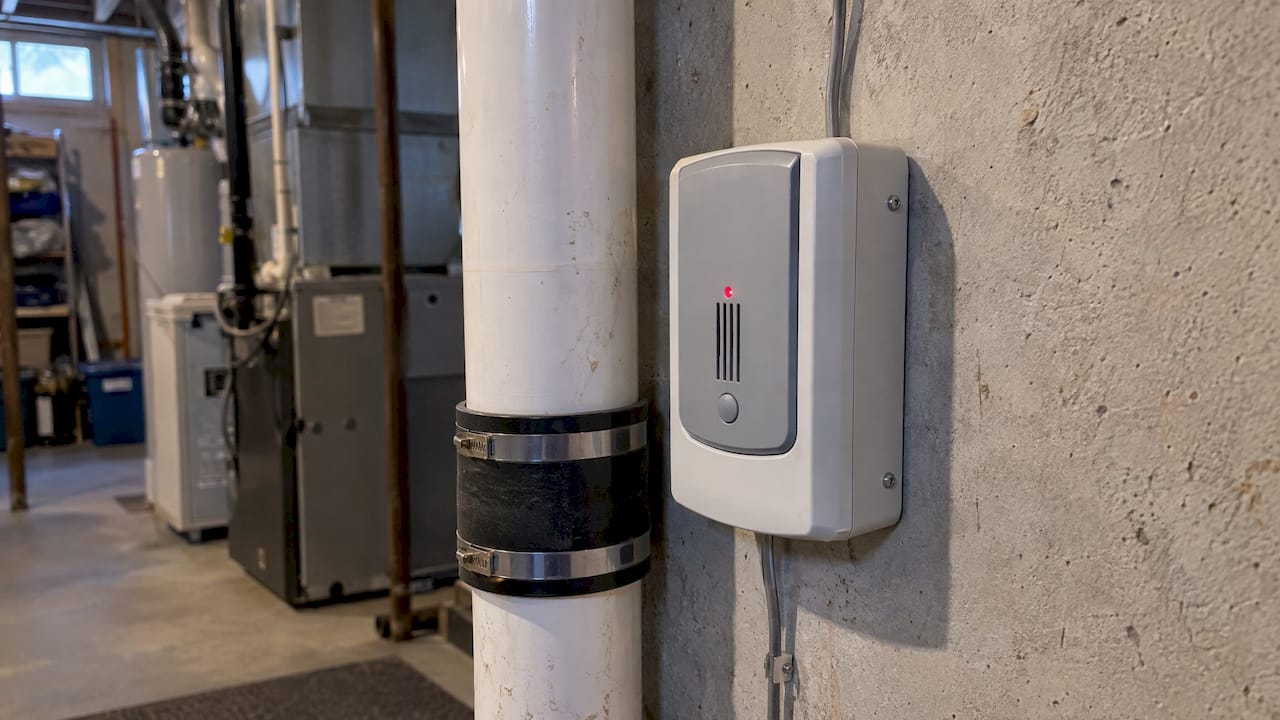
A beeping radon system alarm is a warning that your mitigation system may have stopped moving air the way it should. It does not measure radon in your home. It senses the suction in the system, and it sounds off when that suction drops or disappears. Start with two checks: confirm the fan has power and confirm the alarm's tubing is connected and not kinked. If the beeping continues, call the company that installed the system.
This guide explains what the alarm is watching, the usual causes, a safe step-by-step check, what to do about the radon in your home while you wait for a fix, and when a repair or fan replacement is the right call.
TL;DR
- The alarm is a safety device that signals when the system loses suction. It is not a radon detector, so a beep says nothing about your current radon number.
- Check the fan's power and the alarm tubing first. If the beeping continues, contact your installer.
- The usual causes are a fan that lost power or failed, a clogged or leaking pipe, and heavy precipitation.
- Silencing the alarm does not fix the problem. Some models silence only the sound for days while the light stays on.
- After any repair, a short-term radon test confirms the home is back below the EPA action level of 4 pCi/L.
Table of Contents
- What a radon system alarm actually does
- Why a radon alarm starts beeping
- What to check first, safely
- Can you stay in the house while the alarm is beeping?
- When to call a radon professional
- After the repair: confirm your radon level
- Selling, buying or renting out a home with a radon system
- Need help with a beeping alarm in Cincinnati?
- FAQ
- Sources
What a radon system alarm actually does
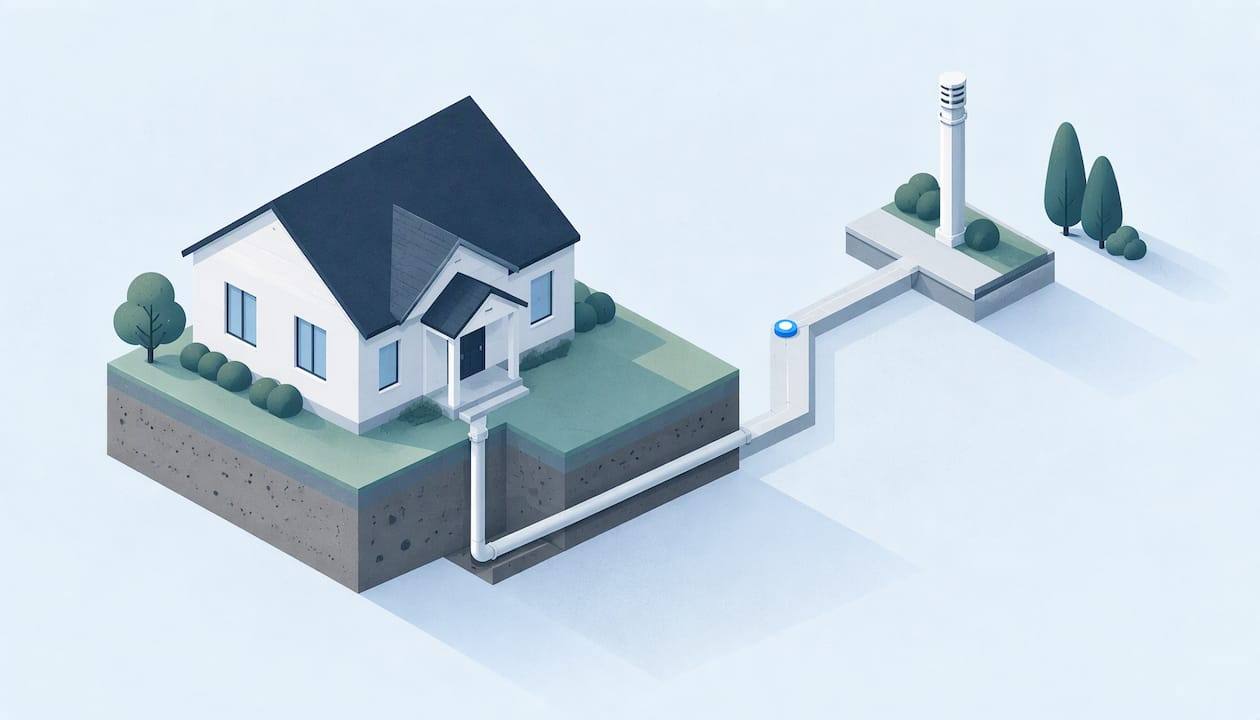
An active radon mitigation system pulls soil gas from beneath your foundation and vents it above the roofline. A fan creates that suction, and the fan runs all the time. The alarm exists because a fan can stop or lose strength without anyone noticing: there is no visible change in the basement, and radon has no smell or color.
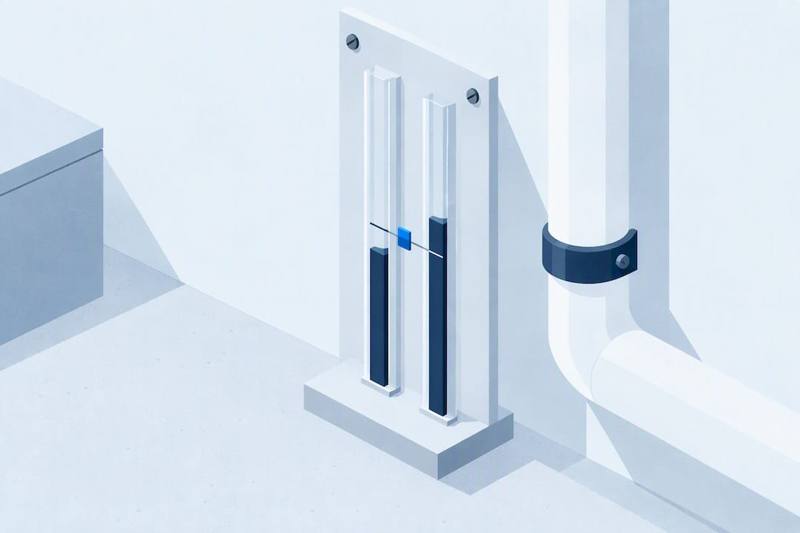
The Minnesota Department of Health describes the active notification monitor as a device that alerts occupants with audible or visual signals if the system stops working or loses the suction it needs. The same guidance says a mitigation system is required to have two fan monitors: a U-tube manometer, which is a simple liquid gauge on the pipe, and that active notification monitor.
That makes the alarm a smoke-detector-style device for the system. It tells you the system is not performing. It cannot tell you whether the air you are breathing is above or below 4 pCi/L. Only a radon test can do that.
How the sensing works
Most alarms connect to the radon pipe with a thin tube. They read the pressure difference between the pipe and the room. When the fan pulls normally, the reading sits where it was when the alarm was first set up. When the fan stops, the pressure goes back toward normal and the alarm responds.
Aprilaire's ARNALM manual is a good example of how one model behaves. It calibrates itself when the battery goes in, running a 20-second start-up to learn the system's normal pressure. If it senses low or no pressure, it waits for a selected delay (48 hours by default) before it enters alarm mode. In alarm mode the buzzer beeps and the red light flashes in 60-second cycles until you press the hush button or the system is serviced. It also has a service mode that triggers after three pre-alarm conditions inside the delay period.
Your alarm may be a different brand with different timing and lights. The pattern is common, though: a delay to avoid false alarms, a sound, a light, and a hush option. Find the model name on the unit and look up its manual for the exact meaning of each signal.
Why a radon alarm starts beeping
The causes fall into a short list. These are the ones that commonly set off alarms: the fan losing power or failing, clogged pipes or debris such as leaves, heavy precipitation, and system leaks.
| Cause | What is happening | Who can fix it |
|---|---|---|
| Fan has no power | A tripped breaker, an unplugged cord or a switched-off outlet stops the fan | You, in most cases |
| Alarm tubing disconnected or kinked | The alarm cannot read the pipe, so it reports a loss of suction | You, in most cases |
| Fan failure | The motor or bearings have worn out and the fan no longer pulls enough air | A radon professional |
| Blocked pipe or exhaust | Debris, leaves or ice restrict airflow | A radon professional, since the exhaust is usually high on the house |
| Leak in the piping | Air enters the system and the suction drops | A radon professional |
| Heavy rain or wet soil | Water in or around the soil can change system pressure | Often clears on its own; call if it persists |
Power problems come first
The simplest explanation is often the right one. A fan that is unplugged, on a tripped breaker, or on an outlet someone switched off will stop. Appliances running on the same circuit can trip it. A dead battery in the alarm itself can also cause beeping, which is a different problem from lost suction, so read the manual to tell a low-battery chirp from an alarm signal.
Fan wear
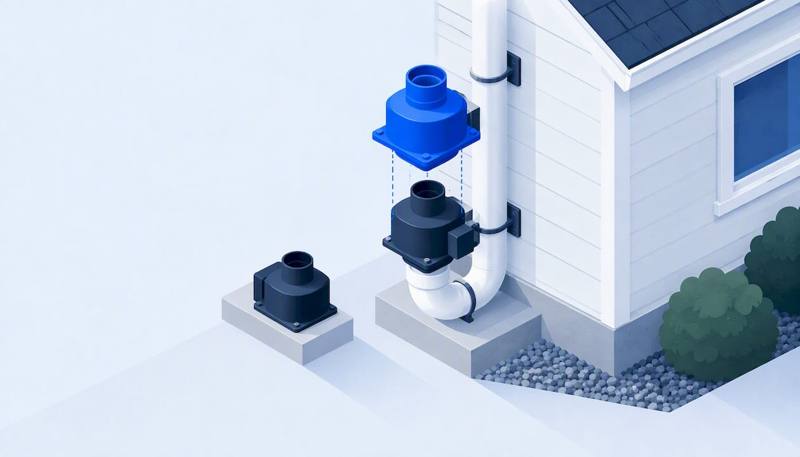
Fans do not last forever. The EPA notes that fans may last five years or more before they need repair or replacement, and puts a replacement at roughly $200 to $350 including parts and labor. If your fan is in that age range and the alarm is sounding, wear is a strong suspect. Our guide to radon fan replacement covers the signs and the cost in more detail.
Weather
Heavy precipitation can trigger alarms, and ice or debris can restrict the exhaust. If the beeping starts during or after a storm and stops by itself as things dry out, note the date and time. If it comes back, treat it as a real fault and have the system looked at.
What to check first, safely
The Minnesota Department of Health guidance says that if the system is not working, check that power is supplied to the fan and that the monitor tubing is connected and not kinked. If an issue remains, contact the installer. Here is the order we suggest.
- Look at the alarm. Note which light is on, what the beep pattern is, and the model name. A photo helps when you call.
- Check the fan's power. Find the outlet or the dedicated switch or breaker. Confirm the cord is plugged in and the breaker has not tripped. Reset a tripped breaker once. If it trips again, stop and call an electrician or your installer.
- Check the alarm tubing. Follow the thin tube from the alarm to the pipe. It should be fully pushed on at both ends, with no crimp, no pinch behind furniture and no water or dust plugging it.
- Read the U-tube manometer. This is the liquid gauge on the pipe. When the fan is running, the two liquid columns sit at different heights. When they are level, the fan is not creating suction. Our article on the manometer zeroing check explains how to read it correctly.
- Listen to the fan. A running radon fan makes a low, steady hum. Silence, rattling, grinding or a sudden change in noise points to a fan problem.
- Stay on the ground. Do not climb onto the roof to inspect the exhaust or open the piping. Leave anything that involves a ladder, electrical wiring or cutting into the pipe to a professional.
If you want a longer checklist, our guide to eight checks to run before calling walks through each one.
About the hush button
A hush button is for quieting the noise while you arrange service. It is not a repair. On the Aprilaire model above, hush silences the sound for seven days while the visual indicator stays as programmed, and after seven days the unit goes back to sensing and sounds again if the fault persists. Do not treat a silenced alarm as a resolved problem.
Can you stay in the house while the alarm is beeping?
A beeping alarm means the system is not doing its job, so assume radon could be building up, especially in the lowest levels of the house. Radon is the second leading cause of lung cancer after smoking. The CDC's ATSDR says elevated radon is responsible for about 21,000 lung cancer deaths a year in the U.S., and that basements and lower levels are likely to have higher levels.
The risk comes from long-term exposure, so a day or two with the system down is not an emergency in the way a gas leak is. But you should not wait weeks. Practical steps while you arrange a fix:
- Call your installer the same day and describe what you found.
- Open windows when the weather allows. The same ATSDR brief describes ventilation as a temporary way to reduce radon while a permanent fix is arranged.
- Spend less time in the basement or lowest level, and avoid sleeping there until the system is working.
- Once the system is repaired, run a radon test to confirm the result.
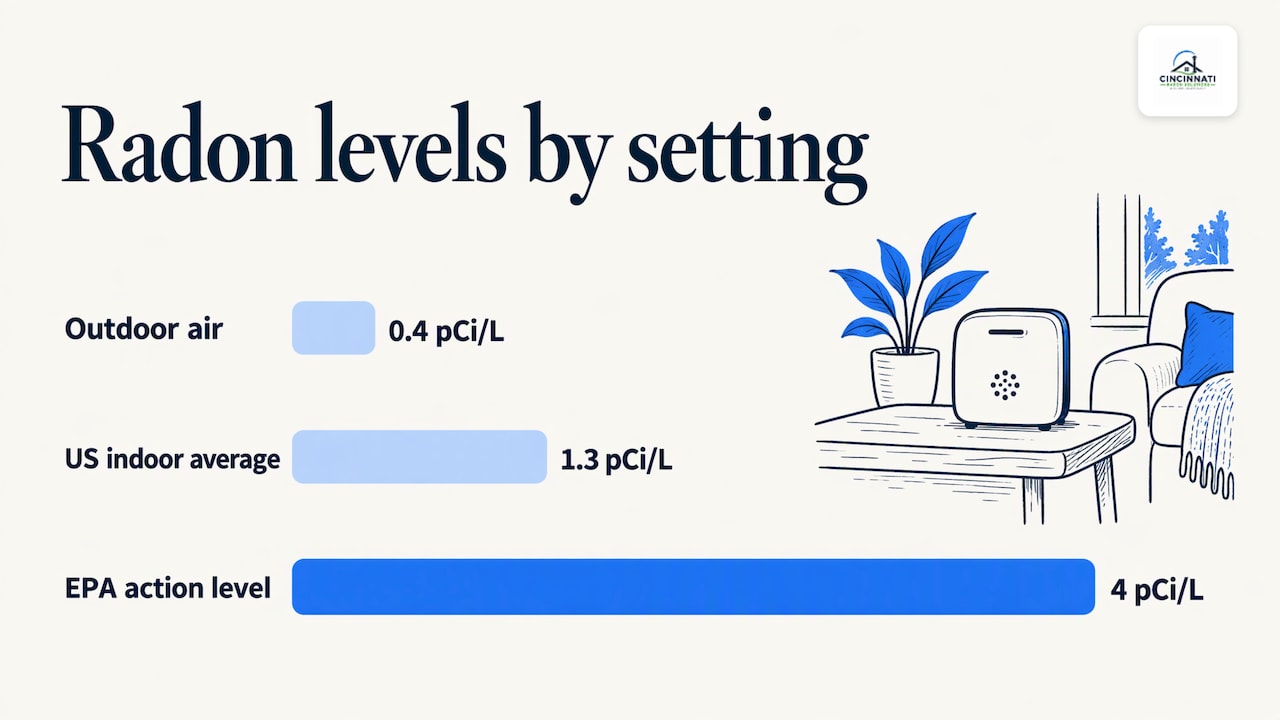
The EPA states that no level of radon is completely safe and sets its action level at 4 pCi/L. For context, it estimates the average indoor level in the U.S. at about 1.3 pCi/L and outdoor air at roughly 0.4 pCi/L. If you have a person with a lung condition or other health concern in the home, talk with their doctor about their situation.
When to call a radon professional
Call when any of these are true:
- You checked the fan's power and the alarm tubing, and the alarm keeps beeping.
- The fan is silent, noisy, vibrating or visibly damaged.
- The U-tube manometer reads level, which means no suction.
- You see damage to the piping, loose joints or a blocked exhaust.
- The alarm returns after you hushed it.
- The system is five or more years old and has never had its fan serviced.
In the Greater Cincinnati area, our repair team handles system repair and fan replacement. When you call, have the alarm model, a description of the lights and sounds, the manometer reading and the date the system was installed. If the original installer is not available, any radon professional can inspect the system, and a system maintenance review is a sensible follow-up.
Our perspective
We design every mitigation system around the home's specific foundation, so we know that a system's performance depends on details a homeowner never sees: the suction point under the slab, the pipe route, the fan location, the exhaust. When the alarm sounds, it is usually telling you one of those details has changed.
We treat the alarm as part of the system, not an accessory. A fixed alarm, a manometer you can read and a documented verification test are what let a homeowner know the system is doing its job. That is why every mitigation we install includes post-installation verification testing, and why our work is ANSI/AARST certified for installations.
Our advice is simple. Do the quick power and tubing check, then call. A repair is usually faster and simpler when the problem is caught early, and a fan replacement paired with a follow-up test gives you a clear answer about where your radon level stands. We quote in writing and do not add costs after the quote, so you know what to expect before we start.
Yoshua
After the repair: confirm your radon level
A working fan is not the same as a safe radon level. After a repair, test. The Minnesota guidance says a short-term test after installation should be done between 24 hours and 30 days in the post-installation timeframe, and the EPA recommends retesting at least every two years to be sure levels stay low.
If the alarm went off for a while, a test is how you learn whether the level moved. Our radon testing service gives you a measured number rather than a guess.
Keep the system healthy
The Minnesota guidance also tells homeowners to perform monthly checks of their system monitors and the fan power supply. A monthly habit takes under a minute:
- Look at the alarm for any light or sound.
- Read the manometer and confirm the columns are uneven.
- Confirm the fan is humming and the cord or breaker is untouched.
- Write down the date so you notice changes over time.
The Minnesota Department of Health also notes that an owner's stewardship includes correcting conditions that indicate component failure, so a small fix early beats a larger one later.
Selling, buying or renting out a home with a radon system
An alarm that is beeping matters in a real estate transaction. A buyer's test or an agent's request for documentation can expose a system that is not running. If you are selling, fix the system and retest before listing so your paperwork reflects a working system. Our team provides documentation suitable for real estate transactions, and our guide to who pays for radon mitigation explains how owners, buyers and sellers usually handle it.
For apartment and commercial buildings, an alarm that is ignored can become an underwriting or tenant issue. We cover that in our guides to radon in apartments and commercial radon mitigation.
Need help with a beeping alarm in Cincinnati?
We focus only on radon, so a beeping alarm is a routine call for us. We inspect the fan, the piping, the monitor and the alarm, repair or replace what has failed, and confirm the result. Pricing is quoted in writing before work starts.
If your system is failing or you are not sure it ever worked, see our radon system repair and fan replacement page, or review all our radon services. If you are weighing a new or upgraded system, our guide to mitigation methods shows how each approach fits different foundations.
FAQ
Does the radon alarm tell me my radon level?
No. It monitors whether the system is pulling suction, not the radon concentration in your air. A radon test is the only way to measure your level, and the EPA action level is 4 pCi/L.
Should I leave my radon fan on all the time?
Yes. The fan is designed to run continuously, because radon keeps entering the home from the soil. If it has stopped, check that power is reaching it, and if that does not solve it, contact your installer.
What should I do if my radon mitigation system isn't working?
Check the fan's power and make sure the alarm tubing is connected and not kinked. If the alarm keeps sounding, call the installer or a radon professional, ventilate the home when possible, and test once the repair is done.
Is it okay to sleep in a basement while the alarm is beeping?
It is better to sleep on an upper level until the system works. Basements tend to have the highest radon levels, and the health risk comes from long-term exposure, so arrange a repair promptly rather than waiting.
How much does it cost to replace a radon fan?
The EPA puts a fan replacement at around $200 to $350 including parts and labor. Your actual cost depends on the fan model and your system, so ask for a written quote.
Sources
- Radon Mitigation System: Important Safety Information, Minnesota Department of Health
- OM&M Manual for Systems Not Maintained by the Occupant, Minnesota Department of Health
- How do I know if my radon mitigation system is working properly? EPA
- Home Buyer's and Seller's Guide to Radon, EPA
- Clinician Brief: Radon, CDC/ATSDR
- Aprilaire ARNALM System Alarm User Manual
- Why is my radon alarm going off?